


Venice: A City that Stays with You
Updated: May 7

Visiting Venice: What Makes This Floating City So Unforgettable
There are certain places in the world that are almost hard to believe the first time you see them—and Venice is one of those places. From the moment you arrive, you realize this is not like any other destination. There are no cars, no busy streets filled with traffic, and no familiar rhythm of city life.
Instead, canals take the place of roads, boats replace taxis, and centuries-old bridges connect small islands that seem to float gently on the water.
Venice is built across more than one hundred small islands in the northern Italian region of Veneto, resting quietly in a lagoon along the Adriatic Sea. Because of this, many people lovingly refer to it as the floating city.
Venice is one of the most visited destinations in Italy, drawing travelers from around the world who come to experience its unique canals, bridges, and centuries of history.
But what makes Venice unforgettable isn’t just its history—it’s the feeling you get when you arrive.

Two Arrivals, One Unforgettable City
The first time we visited Venice, we arrived by cruise ship.
Watching the city slowly appear as the ship approached the lagoon was incredible. The terracotta buildings you had imagined seeing suddenly stood right in front of you. It was our first time there, and everything felt new.
When you arrive in the port of Venice—where larger cruise ships once docked—you see a different side of the city. Water taxis wait nearby to take you toward the city center or to another point where your day of exploring begins.
It was also a special trip for us because we were traveling with our son, our cousin (who is like a daughter to us), and family friends. Experiencing this beautiful city together for the first time made it even more meaningful. At the time, the kids were 18 and 21 and seeing how excited they were to be there made the trip unforgettable.
We wandered through the narrow streets, crossed small bridges, and discovered quiet cafés tucked between centuries-old buildings. Our ship was docked overnight, so we were able to experience the charm the city offers in the evening as well.
I remember walking along the narrow streets with our son, simply talking as we passed small canals and glowing streetlamps. We had been window shopping when he came up beside me, put his arm around me, and thanked us for bringing him on the trip and giving him the opportunity to experience it. He told us what an amazing time he was having and how much he appreciated being there.
I remember feeling completely present and grateful to be experiencing it with him.
It was one of those moments you never really plan—but somehow it becomes one of the memories you hold onto the longest.
About two years ago, we returned to Venice again with family friends.
This time we arrived by train from Rome and spent two and a half days exploring the city.
After stepping out of Santa Lucia Station, we made our way to our water taxi that would take us to our Airbnb.
As the boat entered the Grand Canal, the city slowly opened around us. Historic buildings rose directly from the water, gondolas drifted past quietly, and the afternoon light shimmered across the canal in a way that almost didn’t feel real.
I remember thinking in that moment: Be present. Take this in.
Because it was one of those rare travel experiences where you know, even while it’s happening, that it’s something special.
It felt surreal, beautiful, and almost impossible to fully describe.
I thought I knew what to expect having been there before, but somehow this visit felt different—just as magical in its own way.
That moment alone reminded me why Venice stays with people long after they leave.
Getting Around the Floating City
One of the most unique parts of visiting Venice is how different daily life feels compared to most cities. One of the first things visitors notice about Venice is that there are almost no roads. Transportation here happens on the water.
The main ways to get around include:
• Walking
• Vaporetto water buses
• Water taxis
Walking is often the best way to experience Venice. The city is full of narrow alleyways, hidden squares, small local shops, and quiet canals that you would easily miss if you rushed from place to place.
Some of my favorite moments happened simply by wandering—discovering unique restaurants, stopping for gelato, and turning a corner to find a peaceful canal lined with gondolas.
For longer distances across the city, the vaporetto water buses are a convenient and economical option.
If you plan to use them frequently, purchasing a day pass can be worthwhile.
Is a Gondola Ride Worth It?
This is one of the most common questions travelers ask about Venice.
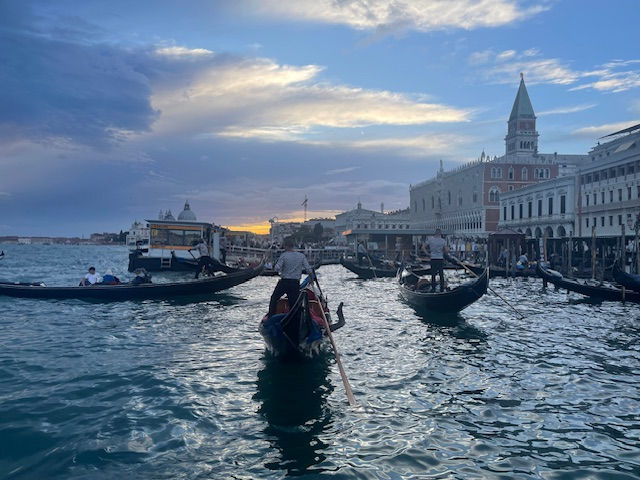
Gondola rides are certainly one of the most iconic experiences in the city, and they can be expensive. A typical ride costs around €80 for about 30 minutes, and sunset rides are often higher.
That said, if you are considering it, I would recommend doing it once.
During our first visit, six of us shared a gondola ride at sunset. The gondolier guided us through smaller canals as the evening light softened across the water. Our ride lasted around 45 minutes and became one of those moments we still talk about today.

How Many Days Do You Need in Venice?
Venice is often part of a larger trip through Italy, which leaves many travelers wondering how much time they should set aside to really experience it.
While you can see many of the main highlights in a single day, I think Venice is best experienced over two to three days, allowing time to wander beyond the busiest areas and truly take in the atmosphere of the city.
Some of the most memorable moments happen when you simply walk without a destination, cross a small bridge you hadn’t planned to see, or stop for a quiet espresso or Aperol spritz along a canal. Having a little extra time allows you to experience those moments.
If your schedule allows, spending two to three days in Venice gives you the chance to explore the main landmarks, enjoy a gondola ride or canal cruise, and even visit nearby islands like Murano or Burano, which are totally worth the trip.
And if you have more time, it also makes Venice a wonderful base for a day trip to places like Verona, which is only about 74 miles away.
Places You Should Not Miss in Venice
Venice is filled with remarkable landmarks and historic sites. These are a few highlights worth including during your visit.
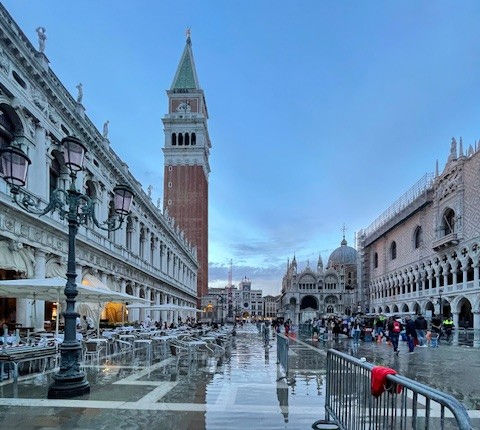
Piazza San Marco (St. Mark’s Square) Often considered the heart of Venice, St. Mark’s Square is surrounded by historic buildings, cafés, and several of the city’s most famous landmarks, including St. Mark’s Basilica and Doge’s Palace.
Palazzo Ducale (The Doge’s Palace) Once the residence of the Doge—the leader of the Republic of Venice—this palace showcases stunning Venetian Gothic architecture.
Bridge of Sighs This elegant limestone bridge connects Doge’s Palace to the old prison.
Rialto Bridge The oldest bridge spanning the Grand Canal and one of the most recognizable landmarks in Venice.

The Islands of the Venetian Lagoon
If you have extra time, visiting a few nearby islands offers a different perspective of Venice. The Venetian Lagoon is actually home to more than 30+ small islands, each with its own history and character. A few of the most popular to visit are Murano, Burano, and Torcello.

Murano is famous for its centuries-old glassmaking tradition. Visitors can often watch skilled artisans demonstrate traditional glassblowing techniques, a craft that has been practiced on the island for generations.
Burano is known for its brightly colored houses and long-standing lace-making tradition. Walking through the island feels almost like stepping into a painting, with vibrant buildings lining the canals.
Torcello offers a quieter atmosphere and a glimpse into Venice’s early history. The island is home to the historic Cathedral of Santa Maria Assunta, known for its beautiful Byzantine mosaics.
A Day Trip Worth Considering
If you have a little extra time in your itinerary, Verona is only about 74 miles from Venice, making it an easy and worthwhile day trip. Often associated with Shakespeare’s Romeo and Juliet, this charming city offers beautiful piazzas, Roman history, and a relaxed atmosphere that feels different from Venice.
One of the city’s most impressive landmarks is the Arena di Verona, a Roman amphitheater built in the first century AD. It is one of the best-preserved arenas in the world and still hosts opera performances and concerts today, creating an unforgettable setting for live performances.
Another popular stop is Casa di Giulietta (Juliet’s House), famous for its connection to Shakespeare’s story of Romeo and Juliet. Visitors often gather in the courtyard to see the iconic balcony, take photos with the statue of Juliet, and leave small love notes on the walls.
In the heart of the city, Piazza delle Erbe offers one of Verona’s most vibrant gathering places. Once the site of a Roman forum, the square is now lined with historic buildings, cafés, and market stalls. It’s the perfect place to sit for a while, enjoy a coffee or aperitivo, and soak in the lively atmosphere of the city.
Even a short visit to Verona gives you a glimpse into another side of northern Italy—one filled with history, romance, and timeless charm.

Venice Quick Planning Guide
Best time to visit: Spring and fall are wonderful times to visit Venice. These shoulder seasons typically offer comfortable weather and fewer crowds than the busy summer months.
I have visited Venice in both May and September, and each time the experience felt ideal. The crowds were manageable, and the weather was beautiful—generally mild during the day and comfortable in the evenings. Spring brings blooming flowers and longer daylight hours, while early fall offers warm temperatures and a slightly quieter atmosphere as the peak tourist season begins to fade.
Summer (June through August) can be quite busy and hot, so traveling during the shoulder seasons often allows you to enjoy the city at a more relaxed pace.
Currency: Italy uses the Euro.
Getting around: Walking, vaporetto water buses, and water taxis.
Church and Basilica dress codes: Many churches require shoulders and knees to be covered.

Why Venice Stays with You
Venice is a city that invites you to slow down.
You feel it in the quiet canals, the winding alleyways, and the sound of water gently moving against the buildings.
But what makes Venice truly unforgettable are the experiences you carry home with you.
Sometimes it’s the big moments — like watching the city appear for the first time from a cruise ship or gliding down the Grand Canal in a water taxi as Venice slowly opens around you.
But often, it’s the quieter moments you remember most — the early morning walks, the hidden corners, the feeling of simply being present in a place unlike anywhere else.
That’s part of the reason I fell in love with Italy in the first place.
And if Venice is on your travel list, I hope you give yourself enough time to truly experience it.
I’d love to know — have you ever visited a destination that stayed with you long after the trip ended?
Ciao!

Comments